





In the digital age, maintaining online anonymity has become increasingly challenging due to the extensive tracking and data collection practices employed by websites, advertisers, and even cybercriminals. One effective method to safeguard privacy while browsing or conducting online activities is through the use of rotating residential proxies. These proxies provide a dynamic layer of anonymity that helps users stay hidden from prying eyes and avoid detection.
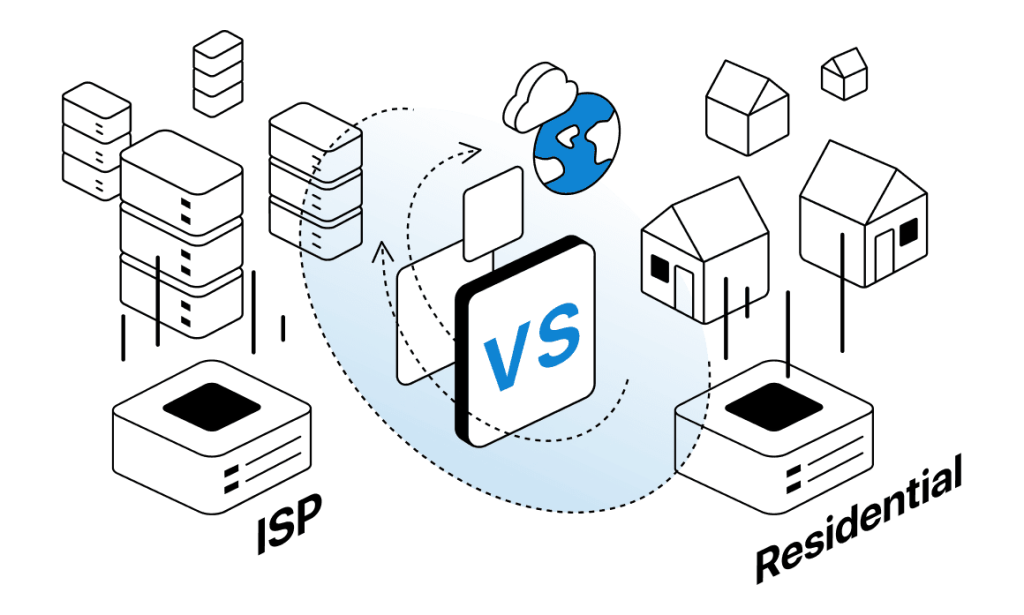
Residential proxies function by routing internet traffic through real devices assigned with legitimate residential IP addresses provided by Internet Service Providers (ISPs). Unlike datacenter proxies, which originate from centralized servers and are easily identifiable as proxy IPs, residential proxies appear as ordinary user connections. This makes them less likely to be blocked or flagged by websites because they mimic genuine user behavior more closely.
The concept of rotation in residential proxies refers to periodically changing the IP address used for each connection or request. Instead of relying on a single fixed IP address that can be tracked or blacklisted over time, rotating residential proxies cycle through a pool of different IP addresses sourced from various geographic locations. This constant change dramatically reduces the risk of detection and enhances security during web scraping, ad verification, sneaker copping, social media management, or any activity requiring multiple requests without raising suspicion.
One significant advantage of rotating residential proxies is their ability to bypass geo-restrictions and censorship effectively. Since these IPs are distributed globally across numerous countries and cities, users can access region-specific content seamlessly while appearing as local visitors. This feature is particularly valuable for businesses conducting market research or individuals seeking unrestricted access to information worldwide.
Furthermore, rotating residential proxies help prevent rate limiting imposed by websites when too many requests come from a single IP address within a short period. By distributing requests across multiple rotating IPs, users can maintain consistent performance without triggering automated defenses designed to block suspicious traffic patterns.
However, it’s essential to choose reliable providers offering high-quality rotating residential proxy services with large pools of authentic IP addresses obtained ethically. Poor-quality providers may supply recycled or compromised IPs that could lead to account bans or legal issues.
In conclusion, staying anonymous online requires sophisticated tools capable of masking digital footprints effectively. Rotating residential proxies stand out as an indispensable solution for anyone needing enhanced privacy combined with robust functionality across diverse internet applications. By leveraging constantly changing real-user IP addresses spread worldwide, users gain unparalleled protection against tracking mechanisms while enjoying unrestricted access in an increasingly monitored digital environment.




More Stories
Generative AI Workflows How Neural Networks Streamline Content Operations
Hardcore Fun Awaits Join the Most Thrilling Survival Servers
Teaching Machines to Write The Creative Evolution of Neural Networks